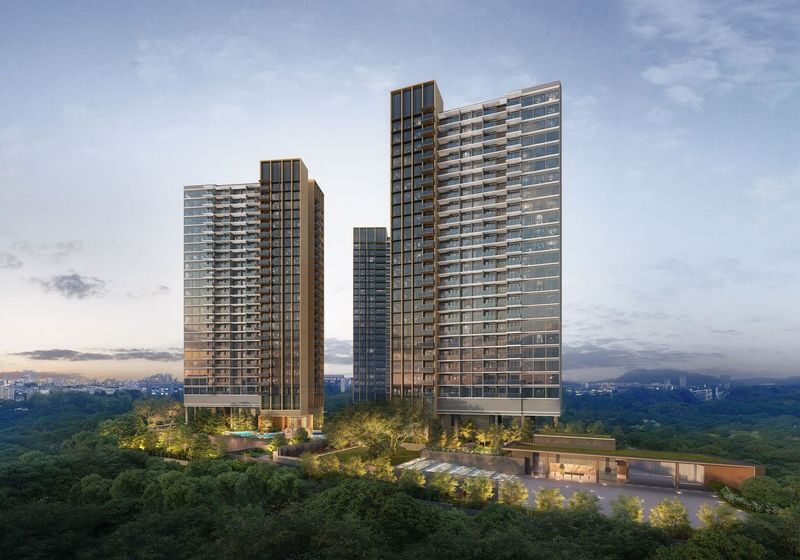
Top 10 Urban Living Trends Which Will Reshape Cities Around The World From 2026 To
Cities have been humankind’s greatest and most complex invention. They are the place to gather ideas, people thoughts, problems and possibilities in ways that nothing else of human settlement can match. The urban scene of 2026/27 will be changed by a range circumstances that’s simultaneously exhilarating and challenging: environmental pressures that require fundamental changes to how cities are built and run, technology providing new ways of dealing with urban complexity, shifting patterns of mobility and work that are changing the way people use city spaces, and an ever-growing need for cities that work better for those who actually live in them instead of just people who pass by or investing into these cities. The following are the ten most important urban living trends that will transform cities around the world by 2026/27.
1. The Fifteen-Minute City Concept Gains Practical Traction
The notion that life in cities should be planned to ensure that everything a resident needs on a regular basis in terms of education, work shopping, healthcare green space, as well as social infrastructure are available within 15 minutes of walking or bike ride from home. The concept has moved from the theory of urban planning into practicable policy in a growing range of metropolitan areas. Paris is perhaps the most prominent illustration, but a variety that incorporate this concept are being implemented throughout Europe, Latin America, as well as parts of Asia. There are some who have expressed reservations about the possibility of these designs to hinder movement, but the concept behind them, designing cities around the human scale and daily living, not dependence on cars, is gaining significant mainstream support.
2. Housing Affordability Drives Bold Policy Experiments
The affordability of housing in major cities around the world has reached a severity that is requiring policy responses higher than anything we’ve seen in the recent past. Zoning reforms, density bonuses and compulsory affordable housing requirements and taxation on land value, public housing construction in large quantities and a ban on short-term rental services are all being utilized in a variety as cities seek out strategies that have the potential to significantly change the dial. There is no single approach that has proved as universally effective, and so the political economy of implementing housing reforms is currently disputable. However, the realization that staying in the dark is no possible anymore is leading to a level of policy experiments that, over time it is beginning to give the necessary lessons.
3. Green Infrastructure Becomes Core Urban Design
Urban greening has transformed from a mere cosmetic idea to the core element of how cities design for climate resilience, the health of citizens, and living. Tree canopy growth, green roofs and walls, urban wetlands, pocket parks, and the daylighting of underground waterways are all being integrated in urban design at levels that reflect the numerous functions that green infrastructure fulfills. It reduces the urban heat island effect, manages stormwater, improves air quality, enhances biodiversity, and offers tangible improvements in mental and physical wellbeing of urban populations. Cities that invested in green infrastructure 10 years ago are already demonstrating outcomes that are accelerating adoption elsewhere.
4. Urban Mobility Transforms Around Active And Shared Transport
The private car’s dominance of urban space is being challenged more seriously than at any prior time. The cycling infrastructure is growing rapidly throughout Europe as well as in many other regions. E-bikes as well as e-scooters have emerged as important elements to urban mobility within a number of cities. The public transport sector is growing in response to both environmental commitments and the realization that car-dependent cities cannot function effectively with the volumes of urban growth demands. The transformation process isn’t always smooth and at times contentious, but the direction is certain: cities are gradually getting rid of private cars as well as redistributing it to pedestrians moving around, active transport, and shared mobility options.
5. Mixed-Use Development Replaces Single Use Zoning
The legacy left by twentieth-century urban planning, which separated residential, commercial, and industrial zones, is now changing in cities after cities. Mixed-use development, where housing, work spaces and hospitality, retail and community facilities within same neighborhoods and buildings, results in more livable, walkable economic and sustainable urban spaces. The trend has been accelerated because of the demise of demand for single-use office districts and monocultures of retail based on changes in the way people work and shop. The former business districts are being reinvented as mixed neighborhoods, and new development is increasingly necessary to incorporate a variety of uses from the outset.
6. Smart City Technology Matures Into Practical Application
Smart city concepts spent the last few years being a source of more hype and less outcomes, with the ambitious sensor technologies and data-driven platforms often struggle to bring tangible improvements to the quality of life in cities. The advancement of technology and a more sensible approach to deployment are producing more practical and useful applications. Intelligent traffic management that decreases congestion and emissions, predictive maintenance systems that tackle infrastructure issues before they cause insolvencies, real-time pollution monitoring that helps inform public health measures as well as digital platforms that provide city services in a more accessible way provide tangible benefits for cities that have implemented them with care.
7. Urban Food Production Scales Up
Urban food production is moving from a hobby for rooftops to a serious component to the food and drink strategy of some of the most innovative municipalities. Vertical farms utilizing controlled environment agriculture produce lush greens, and herbs in warehouses that have been converted and specifically designed facilities using a fraction of that amount of land and water required by conventional agriculture. Community gardens like school gardens, as well as urban orchards perform social and educational functions alongside food production. The amount of food intake that could realistically be fulfilled by urban production remains limited however, the direction of development, toward shorter supply chains and greater food security and stronger connections between urban residents and food systems is obvious.
8. Inclusive Design Boosts The Urban Agenda
The principle that cities must be designed and constructed to function with all residents comprising disabled, older people, children, and those who have limited financial resources is receiving more interest in urban planning circles. Frameworks for cities that are age-friendly that incorporate universal design principles for transport and public spaces Co-design methods that involve community groups who are marginalized in designing their neighbourhoods, and standards for affordability that stop the removal of residents with long-term commitments from improving areas are all being studied more closely. The recognition that a community built for only the active, young and the rich is unable to serve a substantial proportion of its residents is creating new and more inclusive models for city planning and governance.
9. The Night-Time Economy Becomes Smarter Managed
Cities are paying more sophisticated at what happens after the darkness. The night-time economy which encompasses entertainment, hospitality facilities, cultural activities, and the service workers who ensure the functioning of cities all night long provides significant economic plus cultural worth that’s historically been managed poorly. In-depth night mayors or economic commissioners, which are present in cities ranging from Amsterdam to Melbourne represent those interests of business owners and residents alike, as well as mediating conflicts and devising policies that encourages a lively nocturnal city that does not make life miserable for those that need to sleep. The model is becoming exportable and increasingly powerful.
10. Socialization And Belonging Drive Urban Renewal
Between the physical and technological aspects of urban transformation lies an enormous social challenge. Many urban residents, in particular in fast-changing urban environments feel disconnected from the communities that surround them. A growing portion of urban practices is focusing on establishing Social infrastructure, the community centres markets, libraries, communal spaces, and the deliberate programs that foster genuine human connection in dense urban environments. The most successful urban renewal projects of our time include those that blend improved physical infrastructure with a continuous investments in community building, acknowledging that a community is most importantly defined by its relationships and structures.
Cities will always be the primary arena in which humanity’s most important challenges will be addressed, as well as its most crucial opportunities are pursued. The patterns above don’t depict a perfect utopia. Rather, the changes they reflect have been contested, limited, and unevenly distributed across diverse urban environments. However, they suggest cities that are, in a rising number of areas evolving into more living, more sustainable, and more in tune with the needs of those who reside in them. For additional info, explore some of these trusted To find more insight, head to a few of the most trusted wordcurrent.uk/ for more info.
The Top 10 Fitness And Sports Changes Gaining Ground In 2026/27
The way people perceive sport training, exercise, as well as physical performance is changing more rapidly than at almost any previous stage. Technology is changing the way top athletes compete and train, as well as the way people in general understand and manage their fitness. A culture’s views on physical activity have changed with a focus on broadening the participation of people, tearing down traditional barriers and creating new types of sport and movement that were not there just a few years ago. It doesn’t matter if you’re an avid individual, casually a gym-goer, or someone just beginning to consider physical health it is clear that the landscape will be new in 2026/27. Here are ten of the sports and fitness trends that are dominating.
1. Wearable Technology Delivers Increasingly Sophisticated Information
The generation of wearable fitness technology expected in 2026/27 will go far beyond counting steps and monitoring heart rate. Continuous glucose monitoring blood oxygen saturation heart rate variability, skin temperature, sleeping status and hydration architecture are all being tracked by consumer devices with a level of accuracy that was previously available only in clinical or elite performance settings. It’s a matter of taking data and processing it in a meaningful way, and the platforms built around wearables are investing a lot in AI-driven analyses that convert unstructured physiological data into actionable guidelines for regular users rather than just numbers requiring an expert’s interpretation.
2. Training is As Important as Training
The recognition that adaptation to training happens during recovery rather than during training is what has made recovery go as a last resort to become the core of fitness culture. Recovery-focused sleep, active methods, cold water therapy and saunas that expose you to heat as well as compression technology, massage guns, and nutrition methods designed to help recover are all considered to be mainstream in place of specialist concerns. Elite sport has always understood this, but tools as well as the knowledge and recognition of the importance of recovery have now reached recreational athletes and general fitness enthusiasts. The change is a transition away from a more-is better approach to training. It is an improved calibration of tension and recovery.
3. Functional Fitness overrides purely aesthetic Goals
The most important reason for gym attendance has historically been appearance, building a body which is designed to look a certain way. A major shift in culture is going on towards functional fitness training that is focused on what the body can do rather than how it looks. For everyday living, strength, mobility in balance, endurance, and the ability to stay physically fit throughout life are all getting more attention as main fitness-related goals. This reflects both an ageing population that is now thinking more critically about longevity and the length of their lives, as well as a shift in the way we think about what physical fitness really serves. The training methods based around exercise quality, strength and endurance, and metabolic conditioning are the principal people who benefit from them.
4. The Health of your mind and exercise are Growingly Interconnected
The scientific evidence linking regular physical exercise to better well-being has become sufficient to warrant currently being discussed in clinical settings as a real therapeutic option for people suffering from depression, anxiety, and stress, rather than merely a lifestyle recommendation. This is influencing both how fitness is advertised and how people perceive their own workout routines. The concept of movement being psychological health maintenance as well than physical health maintenance is becoming more popular and altering how many people feel towards exercise from a necessity that is tied to appearance to a exercise routine tied to overall health. A prescription from a healthcare professional for exercise is becoming more commonplace because of.
5. Combat Sports Reach New Mainstream Audiences
Mixed martial arts, boxing Kickboxing, and the latest formats including bare-knuckle fighting are experiencing significant growth in audiences caused by social media, streaming platforms and the rising popularity of crossover events bringing mainstream celebrity attention to combat sports. Apart from spectating, MMA participation is increasing dramatically through boxing, Brazilian jiu-jitsu, Muay Thai, and MMA training attracting a large number of people who don’t have ambitions to compete, but who find the combination of skill development in physical conditioning, physical challenge exciting in ways that conventional gym training cannot provide. The community and culture around combat sports gyms has proven to be as a strong retention strategy in a health and fitness industry that struggles with dropout.
6. Personalised Nutrition and Supplementation becomes Mainstream
The use of personalized strategies for sports nutrition, specifically tailored to the individual’s physiology the demands of training, recovery requirements and health goals, rather than generic population guidelines, is now moving from elite sports to mainstream fitness culture. DNA-based nutrition recommendations, gut microbiome analysis and continuous glucose monitoring to assess individual metabolic responses to food and AI-driven dietary planning tools are becoming available to people who are recreational athletes as well as general fitness enthusiasts. The industry of supplements is evolving and advancing, with increasingly sophisticated and evidence-based supplements replacing the less speculative side of the industry that was previously prone to overstating.
7. Outdoor And Adventure Fitness Experiences Surge
Fitness classes are increasingly being challenged with adventure and outdoor fitness experiences that offer challenges in physical fitness, but also provide exposure, novelty, and social connection in ways that indoor training isn’t able to match. Trail running, open-water swimming, outside climbing, gravel cycling, as well as organized adventure races are increasing significantly. The appeal isn’t just limited to in terms of variety. The scientific study into the distinct psychological and physiological benefits of exercise within natural environments is making a compelling case that physical activity outdoors can lead to wellbeing outcomes unlike indoor activities. entirely provide. Urban populations with limited access to nature are creating demand for organised experiences that bring outdoors challenges within reach.
8. Esports and Physical Gaming Blur Traditional Boundaries
The connection between gaming on the internet to physical conditioning is far more complex than the sedentary stereotype suggests. Esports athletes train with specifically designed physical fitness programs to improve the reaction time, focus and management of stress that their requirements in competition. The physical preparation required for high-level sports performance is taken increasingly seriously. In parallel, physically active gaming styles, mixed reality fitness games, and other gamified exercise platforms are entice people to activities that they have not previously played with traditional fitness. The distinctions between physical sport and mental sport as well as gaming are being blurred in ways that are increasing the number that are taking part in organized physical and cognitive exercise.
9. Women’s Sport Continues To Gain Ground Progress
Women’s sport is witnessing a long-term growth in attendance, broadcast viewers, sponsorships, and popularity in the media, which indicates an actual shift in structural structure, instead of a temporary increase. Football, rugby, cricket as well as basketball are all seeing female-dominated competitions draw the type of commercial funding and public attention that used to be centered exclusively on male-dominated sports. The young female talent pool participating in organized sports has grown faster than earlier across the world’s major markets, and this will impact the talent pool, participation rates, and female athletes’ status as serious athletes. The trajectory is strongly positive even though significant gaps in investment, media coverage, and compensation in comparison to the same competitions for men persist.
10. The Longevity & Healthspan of Life Drive A New Fitness Philosophy
The most significant change in the fitness mindset that will be evident by 2026/27 would be to reframe exercises based on longevity and healthspan rather than short-term performance or appearance objectives. The research that studies the relationship with certain training modalities particularly strength training, and cardiovascular fitness, and longer-term physical and mental health outcomes, such as metabolic health, cognitive function bone density, mortality risk is altering the way people view what they are training to train for. Zone 2 cardiovascular training which builds the aerobic base that is associated with metabolic health and longevity, and increasing resistance training in order to maintain body mass and strength during old age are both attracting widespread interest from those who are contemplating what they’d like their bodies to look like after sixty, seventy, and beyond.
The 2026/27 years of fitness and sports show a culture that is being active in physical health in better, more tailored, and more holistic ways as opposed to previous times. These trends share one thing in common: shifting away from narrow focus on appearance, and short-term thinking to an broader and longer-lasting understanding of what it means to be physically healthy. For those who want to get involved with that shift, the tools, knowledge and support available to support them have never been better. For more information, browse a few of these respected actualidadbarcelona.es/ for further information.


 10 Detailed Tips To Choose A Bank Within Maitland, FL